
Polyester / Nylon
EP Fabric Belt
Polyester warp, nylon weft: low elongation, high troughability and excellent moisture resistance — the general-duty workhorse for mining and aggregates.
Home / Products / Conveyor Systems
09 · Material Handling
The complete conveyor line: belts, rollers, pulleys, supports, liners and vulcanizing cements — everything between the load point and the discharge, built for continuous duty.
The conveyor line
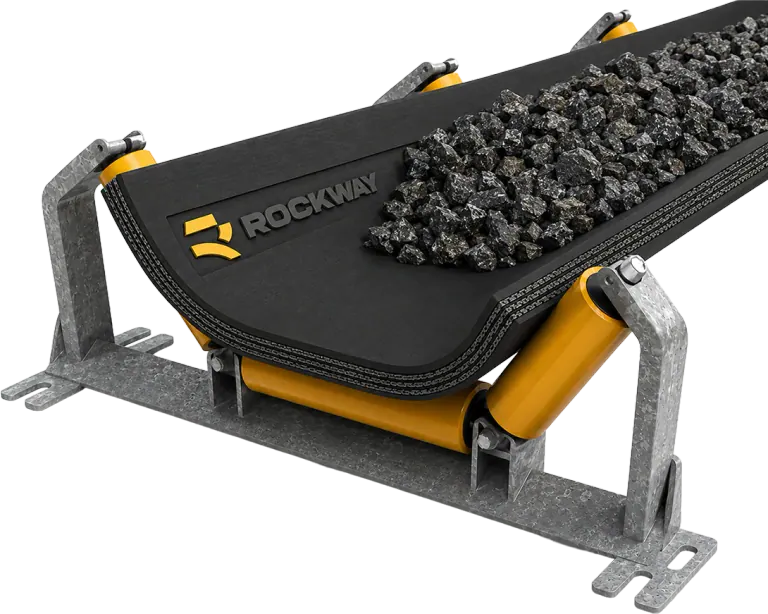
EP / NN / Steel Cord
Conveyor Belts
Abrasion-, impact- and temperature-resistant covers; smooth, chevron and special versions.
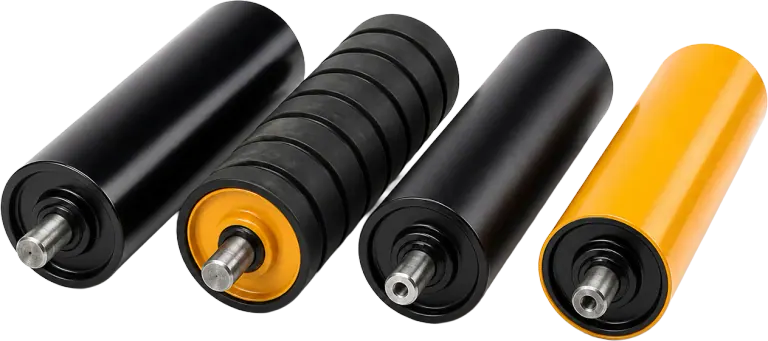
Sealed
Rollers
Carrying, return and impact rollers; rubber or PU covers; self-aligning options.
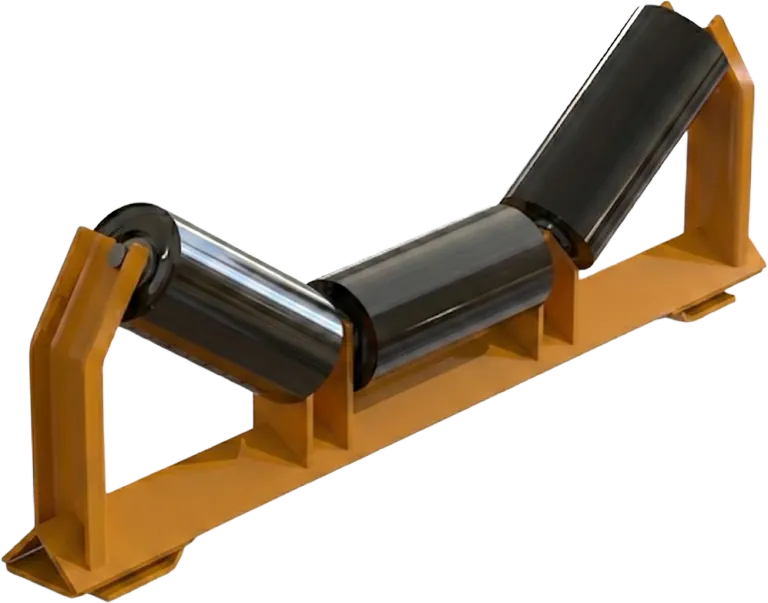
Flat · dual · triple
Idler Supports
Carrying, impact and return supports; reinforced structures for continuous duty.
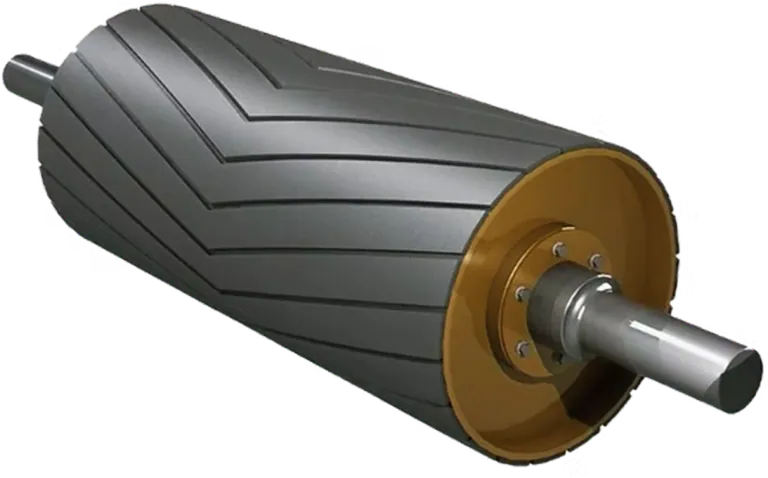
Lagged
Pulleys / Drums
Drive, return and bend pulleys with rubber lagging for grip; cage-type and smooth.
CEMA
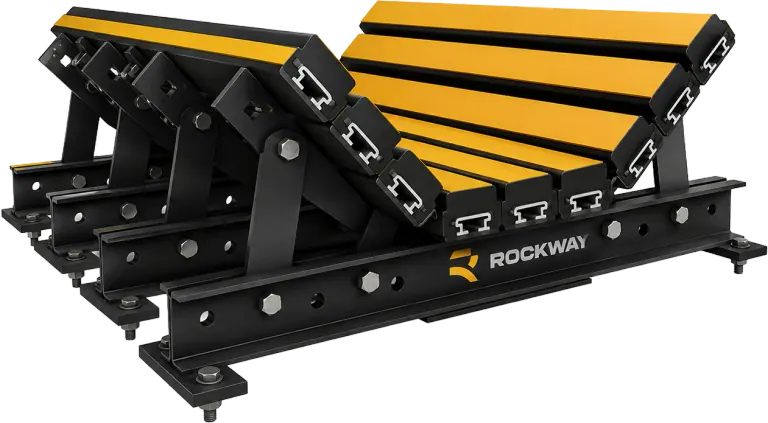
Impact Bed
Superior impact-energy absorption and stable support for heavy loads at the feed point.
Continuous
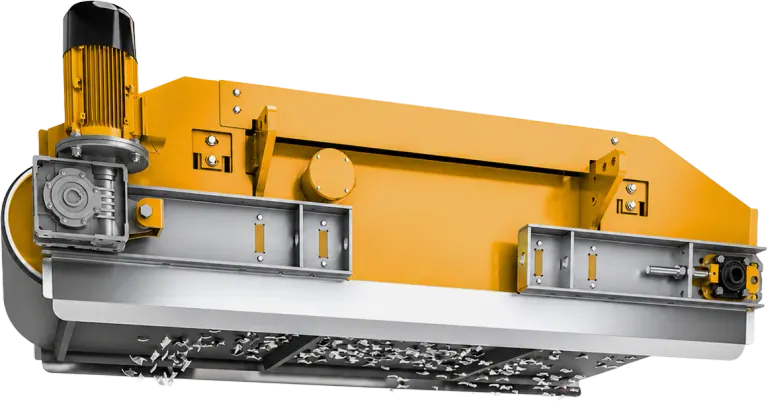
Magnetic Separators
Automatic removal of ferrous contaminants, protecting crushers and mills downstream.
Repair
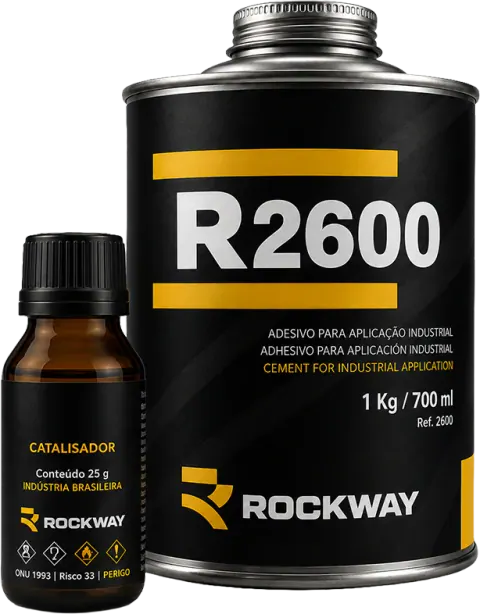
Vulcanizing Cements
Belt repair with excellent aging resistance, easy application and high yield.
5 / 8 mm
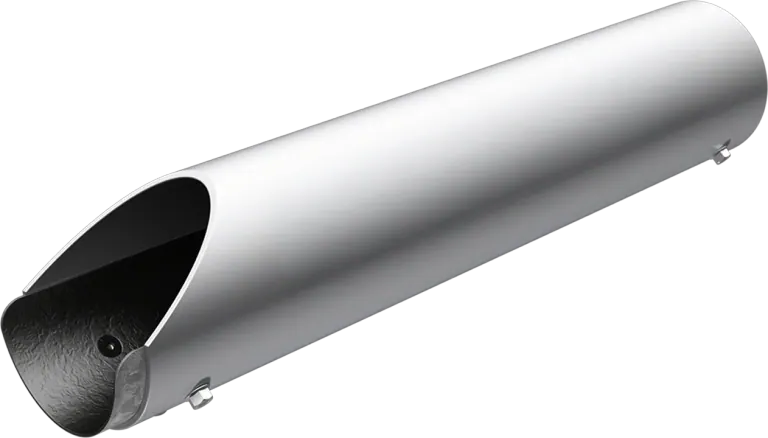
Wear Liners
Vulcanized rubber over a metal base; antistatic (ISO 284) and self-extinguishing (ISO 340).
Belt types
Carcass and covers selected by tension, elongation and abrasive wear — width, number of plies and top/bottom cover thickness defined by tonnage, lump size and drop height at the loading point.
Polyester / Nylon
Polyester warp, nylon weft: low elongation, high troughability and excellent moisture resistance — the general-duty workhorse for mining and aggregates.
Nylon / Nylon
All-nylon carcass with superior impact absorption and flexibility — for heavy lumps, small pulley diameters and demanding loading points.
ST · High tension
Steel cords vulcanized into the carcass (DIN 22131): minimal elongation and the highest tension ratings — long centers, high lifts and overland conveyors.
Smooth · Corrugated · Chevron
Smooth surface for horizontal runs and easy scraping; corrugated for grip on fines and damp material; V-chevron for steep inclines without material rollback.
| Class | Tensile strength | Elongation at break | Abrasion loss | Application |
|---|---|---|---|---|
| RMA-1 | 17 MPa | 400 % | 150 mm³ | Aggregates and moderate abrasion |
| Grade M | 24 MPa | 450 % | 120 mm³ | Mining and heavy duty with impact |
| DIN X | 25 MPa | 450 % | 120 mm³ | High tension with cutting and gouging wear |
| DIN Y | 20 MPa | 400 % | 150 mm³ | General service, moderate abrasion |
| DIN W | 18 MPa | 400 % | 90 mm³ | Severe abrasion, fines and sharp material |
Final selection is defined with tonnage, lump size and material temperature.
Standards & special compounds
Beyond standard abrasion covers, we supply belts in special compounds for demanding environments — oil-, fire- and spark-resistant, certified to the international standards the industry specifies.
MOR / SOR
Moderate (MOR) and severe (SOR) oil-resistant compounds for grains, wood chips, fertilizers and oily minerals — covers that don’t swell or soften in contact with oils.
ISO 340 · EN 12882
Self-extinguishing covers tested to ISO 340 and flame-resistant belt constructions per EN 12882 — for enclosed conveyors, tunnels and cement plants.
ISO 284 · Antistatic
Antistatic covers per ISO 284 dissipate charge build-up, preventing sparks around dust-laden and potentially explosive atmospheres.
Heat service
Heat-grade compounds for clinker, sinter, coke and hot ash — cover selection by continuous and peak material temperature.
Technical sheet · PDF
Conveyor systems — belts, rollers, pulleys, liners & service
Downloads in the language selected in the top menu.
Tension and length. EP (polyester warp, nylon weft) is the general-purpose answer: low stretch, good impact resistance, dimensionally stable in humidity — most quarry and plant belts. NN (nylon/nylon) takes higher impact and flexes tighter, but stretches more, so it needs more take-up. Steel cord is for long, high-tension hauls where fabric would need impractical numbers of plies, and where elongation has to be near zero. Give us centre distance, tonnage, lump size and incline, not just a belt width.
By what damages the cover, not by thickness alone. Abrasion-resistant covers for fine, dry, abrasive material; impact-resistant covers where large lumps drop at the load point; heat-resistant for clinker and sinter; oil-resistant where the material carries hydrocarbons. Thickness then follows the drop height and the cycle time — a thicker top cover on a short, fast belt is often wasted money, while a thin one under a badly designed chute fails early no matter what grade it is.
When the material or the enclosure makes ignition credible: coal, grain, sulphur, anything that produces combustible dust, and any belt running in a tunnel or an enclosed gallery. Antistatic to ISO 284 stops the belt accumulating a charge it can discharge as a spark; self-extinguishing to ISO 340 means a belt that has caught will not sustain the flame. They are different tests answering different questions, and plenty of sites need both.
Tracking problems are almost never the belt. In order of likelihood: off-centre loading, which pulls the belt toward the heavy side every time a load arrives; a structure out of square, so the belt is being steered by the idlers; material build-up on a pulley or return roller, which acts as a crown that was never designed in; and worn or seized rollers. Self-aligning rollers correct a residual tendency — they do not fix a chute that loads off-centre.
An impact bed carries the load on a continuous surface, so the energy spreads instead of concentrating between rollers, and the belt is supported where the sealing skirt needs a flat line. That matters most with heavy lumps and large drop heights. Impact rollers are simpler and cheaper and are adequate where lumps are modest. The load point is where most belts are actually destroyed, so it is the wrong place to save money.