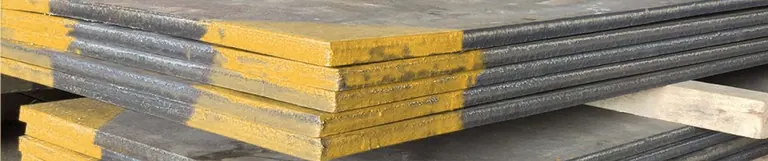
From heavy impact to extreme abrasion: AR400, AR450 and AR500 plates plus chromium-carbide bimetallic plate — the right grade for every wear zone, supplied cut-to-size, rolled or drilled per drawing.
Ready-to-order or custom-engineered — Maximum Productivity · Longer Life · Special Application
The plate grades
The right grade for every zone
370–430 HBW
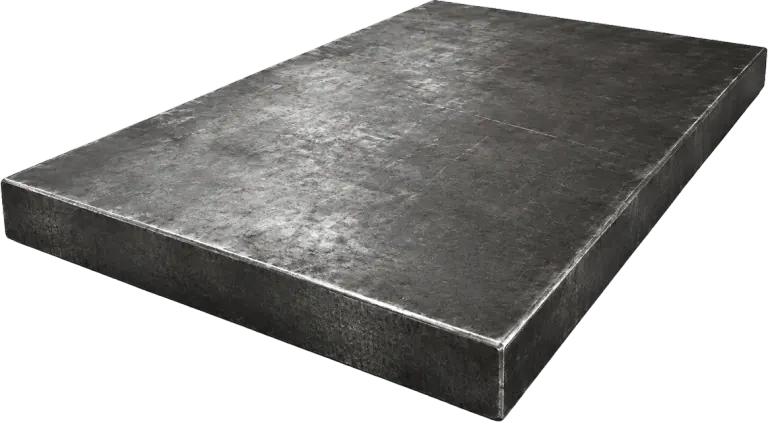
AR 400 Plate
High toughness, excellent weldability and formability — moderate impact: buckets, hoppers, chutes, feeders.
420–475 HBW
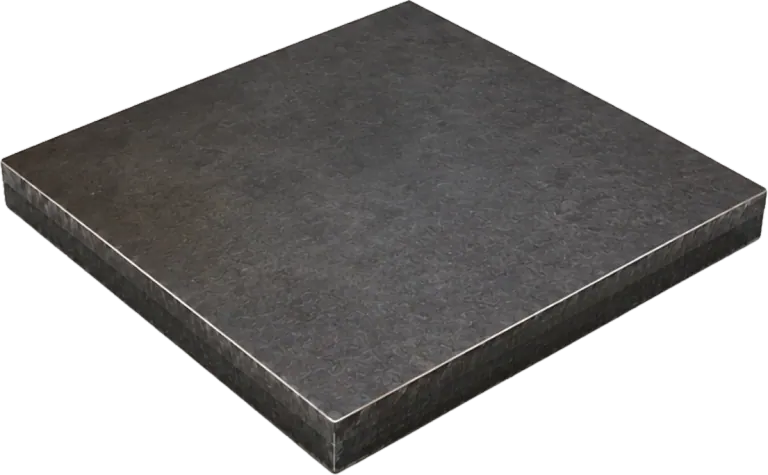
AR 450 Plate
The hardness-toughness balance — crushing, heavy mining and excavation.
470–530 HBW
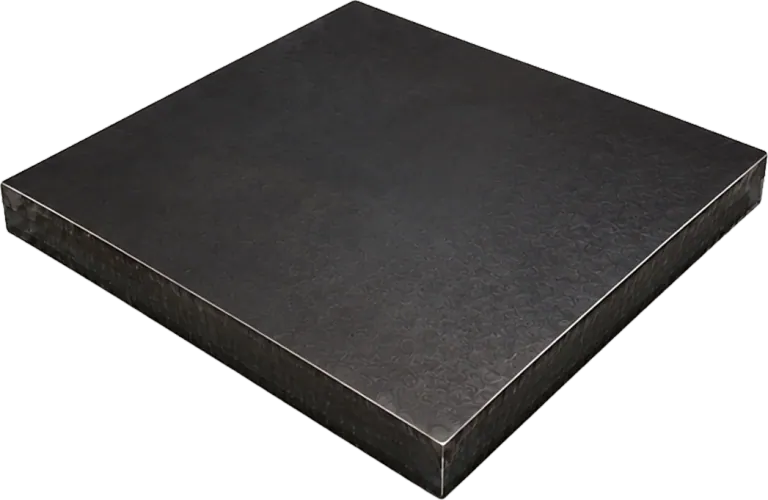
AR 500 Plate
Maximum abrasion resistance — impact-mill liners, severe abrasion zones, transfer points.
58–65 HRC · Premium
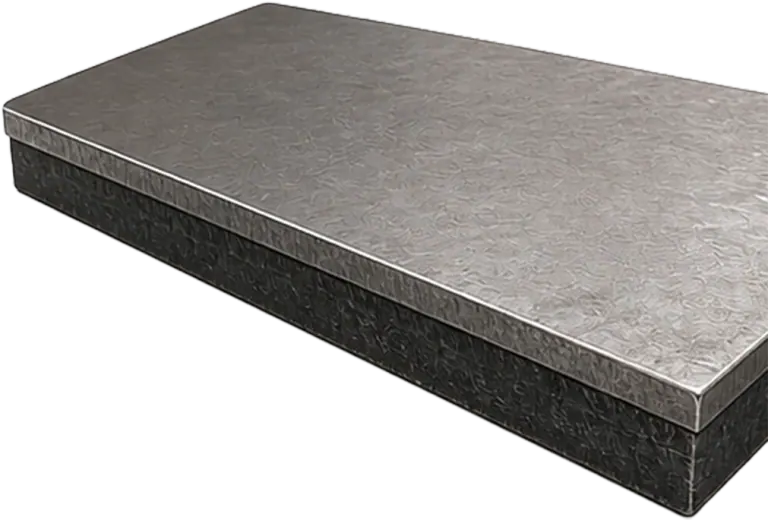
Bimetallic Plate (CCO)
Chromium carbide (Cr7C3) overlay for extreme sliding abrasion — fines chutes, cyclones, ducts.
Material
Hardness
Impact
Abrasion
Dominant mechanism
Recommended application
AR 400
370 – 430 HBW
Impact + abrasion
General equipment with moderate impact
AR 450
420 – 475 HBW
Impact + abrasion (balanced)
Crushing, heavy mining, excavation
AR 500
470 – 530 HBW
Severe abrasion
Mining, transport, transfer zones
Bimetallic (CCO)
58 – 65 HRC
Sliding abrasion
Abrasive fines, chutes, ducts, cyclones
Overlay technology
Chromium carbide overlay (CCO)
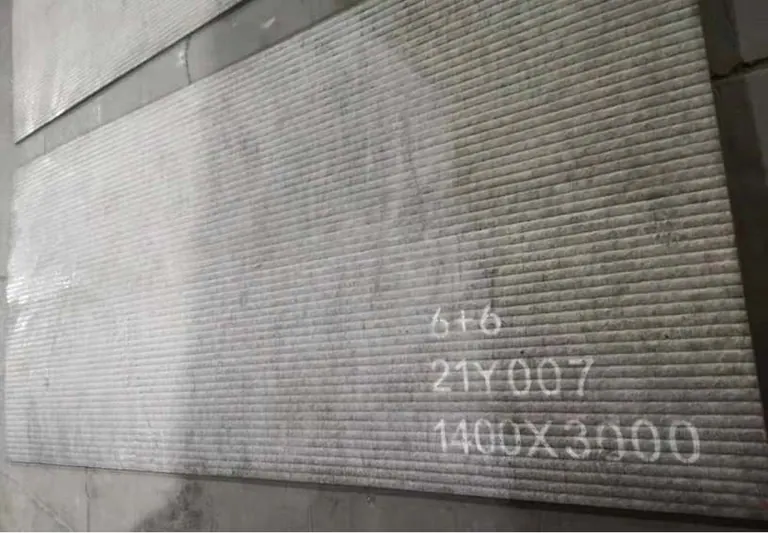
A chromium carbide layer fusion-bonded to a mild-steel backing by submerged- or open-arc welding. The microstructure is primary Cr7C3 carbides in a eutectic austenite matrix: the hard carbides take the abrasion while the ductile plate absorbs impact and keeps the product weldable, formable and easy to install.
Standard CCO Plate
58–63 HRC · Cr7C3 > 35%
·Outlasts quenched & tempered 400 BHN plate by 5–6× in high-abrasion service
·Hardness evenly distributed through the overlay
·Overlay thickness tolerance under 0.5 mm · flatness within ±3 mm/m
·Cut, rolled, drilled, bolted or studded to your drawing
Welding
Mild-steel or low-hydrogen consumables, no preheat required
Cutting
Plasma, cut from the backing-plate side for a clean edge
Smooth CCO — premium
60–64 HRC · Crack- and bead-free surface
·Automatic welding process yields a practically crack- and weld-bead-free surface
·Uniform chemistry and hardness through thickness — variation typically under 3 Rockwell points
·1.5–4× the service life of conventional overlay plate
·Smooth face means lower friction and far less build-up handling bulk material
·ASTM G65-4 mass loss: M30 < 0.15 g · M70 < 0.11 g
M70 — W, Nb, Ti, V and Mo added to the overlay for compound carbides: the strongest abrasion and impact resistance of the range.
M10 — non-magnetic wear plate for strong magnetic environments: 5× the life of 304 stainless in magnetic separators and iron removers.
Standard CCO
The as-welded overlay keeps its characteristic ribbed bead pattern — full abrasion resistance, at the lowest cost per square metre.
Smooth CCO
A flat, practically crack- and bead-free face: lower friction, less material build-up and 1.5–4× the service life.
Laminated wear blocks
700 HB / 63 HRC
High-chrome white iron metallurgically bonded to a mild-steel backing by a vacuum-welding process: extreme hardness on the working face, weldable and impact-tolerant behind it. Chocky bars, wear buttons, strips, wear plates and crusher hammer tips — standard shapes or custom sizes.