
01 · Crushers & Mills
Grinding Balls
Cast · Rolled · Forged
Grinding media for every mill and every ore: high-chrome cast iron (Cr 10–13, 16–21 or 25–30 %) for extreme abrasion, hot-rolled alloy steel for continuous medium-stress operation, and forged steel for high-impact SAG grinding — all 58–65 HRC, Ø17 to 125 mm.
- Materials
- High-chrome cast iron (Cr 10–13 / 16–21 / 25–30 %) · rolled alloy steel · forged steel
- Diameter range
- Ø17 – 125 mm
- Quality
- 58–65 HRC · ASTM A532 / ISO 8656
- OEM compatibility
- SAG, ball and clinker mills — FLSmidth · KHD · ThyssenKrupp Polysius · Metso
- Availability
- Ready-to-order or custom-engineered — Maximum Productivity · Longer Life · Special Application
Grinding media
Three ways to grind
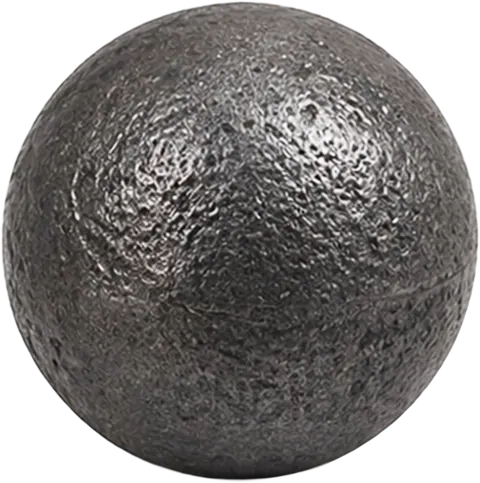
CAST · CR 10–13 / 16–21 / 25–30 %
Cast (High Chrome)
Maximum abrasion resistance, for dry grinding and chemically aggressive media — clinker, limestone, industrial minerals. Lowest cost per tonne ground.
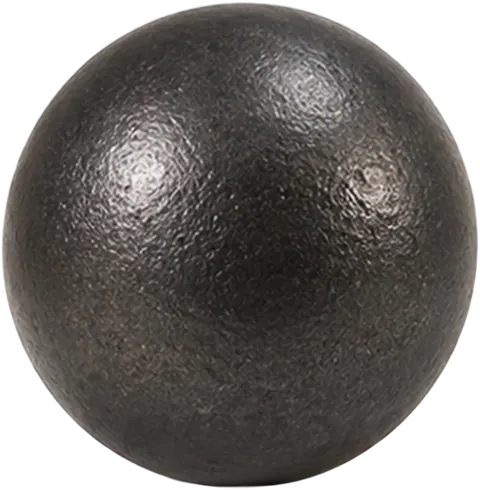
ROLLED
Rolled
Balance of hardness and toughness with a homogeneous structure. For continuously operating ball mills under medium stress — the best cost-performance in the line.
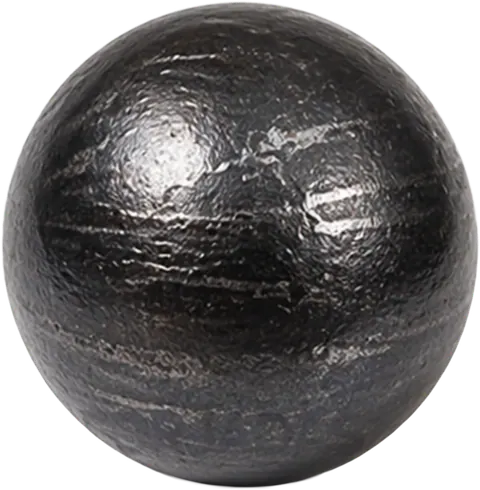
FORGED
Forged
Maximum impact toughness for SAG and large-diameter mills. High-energy wet grinding: they resist fracture and keep their spherical shape to the end of service life.
Properties
- ·Uniform core-to-surface hardness
- ·Physical-chemical certification per cast
- ·Conforms to ASTM A532 / ISO 8656
- ·Diameters from 17 to 125 mm
Applications
- ·Clinker grinding (cement)
- ·SAG and ball mills (mining)
- ·Limestone, coal and industrial mineral grinding
Advantages
- ·Lower specific consumption (g/t)
- ·Lower replacement rate
- ·Lower cost per tonne ground
Frequently Asked Questions
Cast high chrome, rolled or forged — which suits my mill?
Impact decides it. Forging refines the grain and leaves no blowholes or porosity, so forged balls break least and are the safer choice where impact is high — SAG duty and large-diameter ball mills. High-chrome cast iron carries a carbide network that resists abrasion better than steel, which pays in lower-impact, high-abrasion grinding such as cement and clinker, and in wet or corrosive circuits. Rolled alloy steel sits between them for continuous ball-mill duty. Tell us mill type, ball diameter and whether you grind wet or dry.
Which chrome content — 10-13, 16-21 or 25-30%?
More chrome means more carbide, which means better abrasion resistance and less tolerance for impact. The 10-13% range suits general ball-mill and cement duty; 16-21% steps up abrasion resistance for harder ores; 25-30% is for extreme abrasion where impact is genuinely low. Specifying the highest chrome for a high-impact mill is the classic mistake — the carbides that resist abrasion are also what a hard blow cracks.
How do I choose ball diameter and top-up size?
Diameter is set by the largest particle you need to break, not by what the mill last had in it. Too small and coarse feed survives the charge; too large and you waste grinding surface on material that was already fine, and lift power draw for nothing. We supply Ø17-125 mm, and the practical approach is a top-up size matched to your feed top size, with the charge distribution left to settle over normal top-ups rather than reset in one go.
My balls are breaking instead of wearing down.
Breakage is nearly always the wrong ball for the impact, not a bad cast. In a SAG or a large ball mill, a high-chrome ball chosen for its abrasion figure will spall or shatter where a forged ball would simply wear. The other cause is hardness that stops at the surface: a ball hard on the outside and soft in the core deforms and cracks under repeated impact. That is why core hardness matters as much as surface hardness — ask for both.
How do I compare quality between suppliers?
Three things, all measurable. Hardness through the section, not just at the surface — a surface figure alone hides a soft core. Compliance with a real standard: ours are certified to ASTM A532 and ISO 8656, at 58-65 HRC. And breakage rate in service, which is the number that actually costs money, since a broken ball grinds nothing and can damage liners on its way out.